A sequenced plan for clearing material handling equipment out of a closing or relocating facility without losing value or missing deadlines.
When a distribution center closes or relocates, equipment disposition is rarely the hardest part of the project on paper — and almost always one of the most stressful in practice. The reason is the deadline. Lease expirations and turnover dates do not move, and equipment that is still on the floor on the last day becomes an expensive problem.
The facility managers who come out of this well are the ones who start disposition early and treat it as a sequenced project rather than a last-week scramble.
Walk the building with a spreadsheet and capture every powered unit: sit-down riders, reach trucks, order pickers, walkie pallet jacks, walkie stackers, tow tractors, scrubbers and sweepers, scissor lifts, and yard equipment. Record make, model, serial, capacity, hours, and fuel type from each data plate.
Then capture the adjacent items that get forgotten: battery chargers, spare battery packs, spare forks and attachments, manual pallet jacks, and the maintenance shelf. These are real dollars in a package deal and pure cost if left behind.
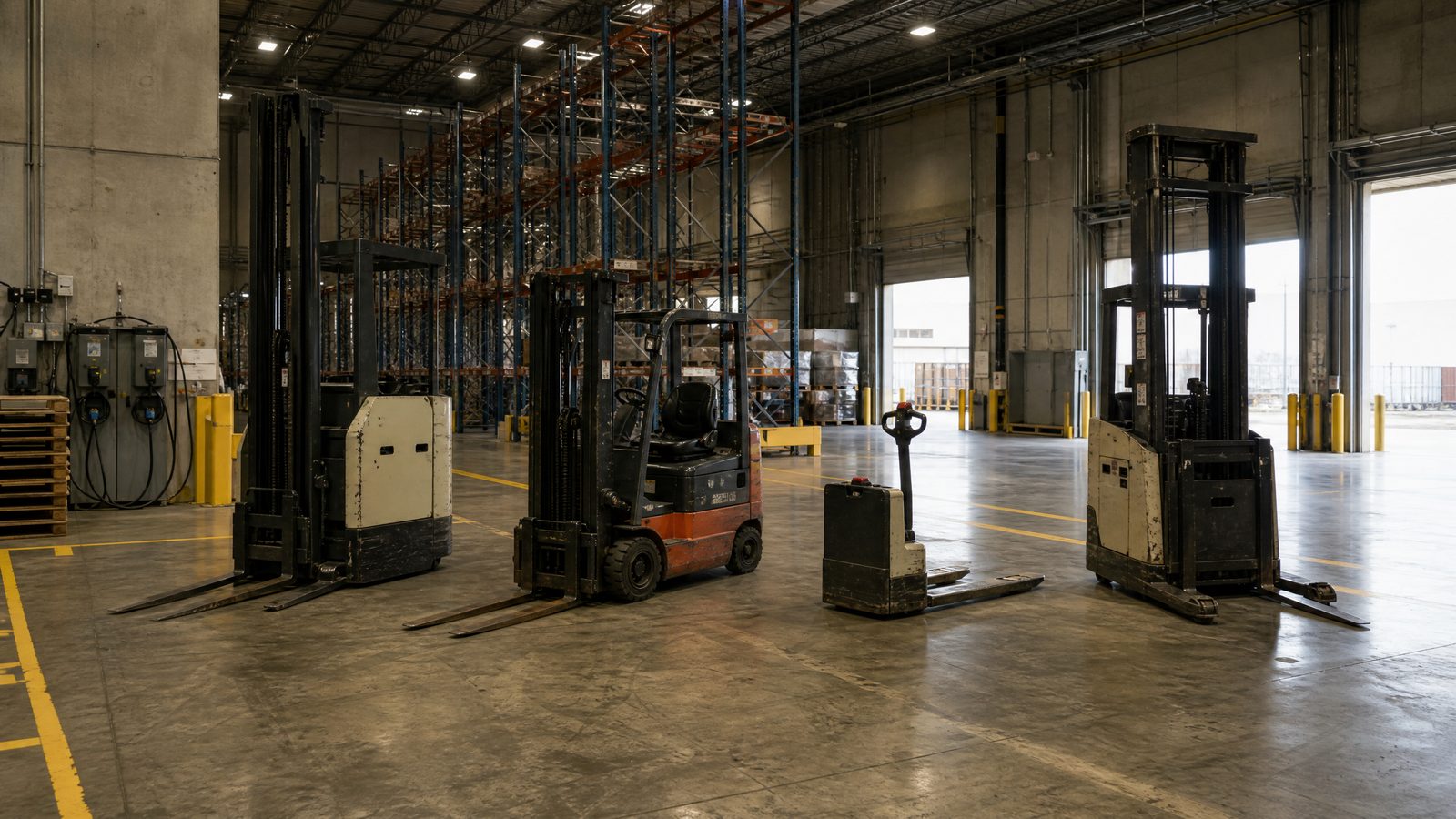
Do the photography as a single organized walk rather than unit by unit over weeks. For each machine: four angles, mast and carriage, data plate, hour meter, tires. Name the files by unit number so the package stays organized. One afternoon of disciplined shooting is enough to price an entire building remotely.
Selling a fleet unit by unit through classifieds produces higher headline prices and far lower net proceeds, because each sale carries its own negotiation, no-show risk, and removal coordination — and the unattractive units never sell at all. Somebody has to buy the forty-year-old Clark and the walkie with the bad drive motor.
A package sale to a single principal buyer trades a little theoretical top-end for certainty: one number, one payment, one coordinated removal, nothing left behind on the last day.
Build pickup around your operational wind-down, not the buyer's convenience. If you need twelve trucks working until the final week, sell the whole fleet now with staged removal — half early, the remainder after the last shift. We schedule multi-load pickups this way routinely, and it lets you keep operating while the disposition is already contractually settled.
Give us your hard dates up front. Deadline-driven closures are normal work for us, and knowing the date lets us assign carriers early rather than scrambling.
Corporate and institutional sellers frequently need purchase orders, W-9s, certificates of insurance, asset release forms, or specific bill-of-sale language. Surface those requirements in the first conversation rather than the week of pickup. We handle all of it, but procurement cycles take time and paperwork is the most common cause of a delayed pickup — not trucks.
Send photos and the data plate. We price it and send a written offer with freight included the same business day.
A practical breakdown of how used forklift values are actually calculated — capacity, fuel type, hours, mast, tires, brand liquidity, attachments, and condition.
Read guideWhy scrap weight pricing leaves thousands on the table on used forklifts, and how machine-level valuation works differently.
Read guideThe exact shot list professional forklift buyers need, and the four photos sellers almost always forget.
Read guideStill buyable. A blown engine, seized transmission, dead hydraulic pump, or cracked mast rail is a line item in our valuation, not a disqualification. Be specific about what failed so the offer is accurate the first time and there is no adjustment later. Trucks with major mechanical faults are a routine part of our volume.
Yes. Telehandlers are among the strongest-value machines we purchase — JLG, Genie, CAT, SkyTrak, Lull, JCB, Manitou — and we buy scissor lifts and boom lifts alongside them, particularly from rental fleet retirements and contractors downsizing after a project. Include attachments like buckets, truss booms, and platforms in your photos.
Hours matter less than most sellers assume. A 20,000-hour propane truck that has been maintained can be worth more than an 8,000-hour unit that sat outdoors and rusted. We look at the whole picture: mast condition, hydraulic leaks, tire wear, cosmetic state, service history, and how the market is currently moving on that specific model. Send the hour meter photo and let us weigh it properly.
None. Offers are free and there is no obligation. Plenty of people contact us simply to establish a value for budgeting, insurance, or an internal approval process, then sell months later or not at all. We would rather be the number you compare against than not hear from you.
All fifty states plus Washington D.C. We are a nationwide buyer with carrier coverage everywhere, including rural areas that local dealers will not drive to. Remote locations do not reduce your offer, because freight is our cost and we build it into our own math, not into your number.
We do. Forklifts generally do not carry titles like on-road vehicles, so most transactions need only a bill of sale, which we prepare. For government, institutional, or corporate sellers who require purchase orders, W-9s, insurance certificates, or specific release forms, we complete whatever your process requires.
Yes, and we do it regularly. Units that have sat outside for seasons, sunk into gravel, or been parked behind a building since the last plant manager left are all normal for us. Our carriers handle recovery, including winching and rigging. Send photos showing access so we can plan the right equipment for retrieval.
In lots, yes. Manual pallet jacks, walkie stackers, drum lifts, hand trucks, and similar equipment are worth buying when there is volume. A single manual jack is not worth a freight run, but twenty of them alongside a couple of forklifts absolutely is, and it beats paying to dispose of them.
Typically two to seven business days depending on your location and the equipment involved. Metro areas on major freight lanes move fastest. Heavy capacity units needing lowboy transport or rigging take a little longer to schedule. If you are working against a lease expiration or facility close-out date, tell us the deadline and we will build the schedule around it.
Get ours too. Sellers are often surprised at the spread between offers on identical equipment, and we are frequently higher because we buy for our own inventory rather than brokering for a fee. Even if you use another buyer, having a second firm number in hand is free leverage.